For Principals, Administrators, and School Leaders
Your teachers are flagging concerns every day.
Most of them never reach the right desk.
Pulse gives every teacher a way to report a concern in under a minute, by voice, from anywhere. It routes the right support to the right student automatically, and gives you a complete picture of what's happening in your school before it becomes a crisis.
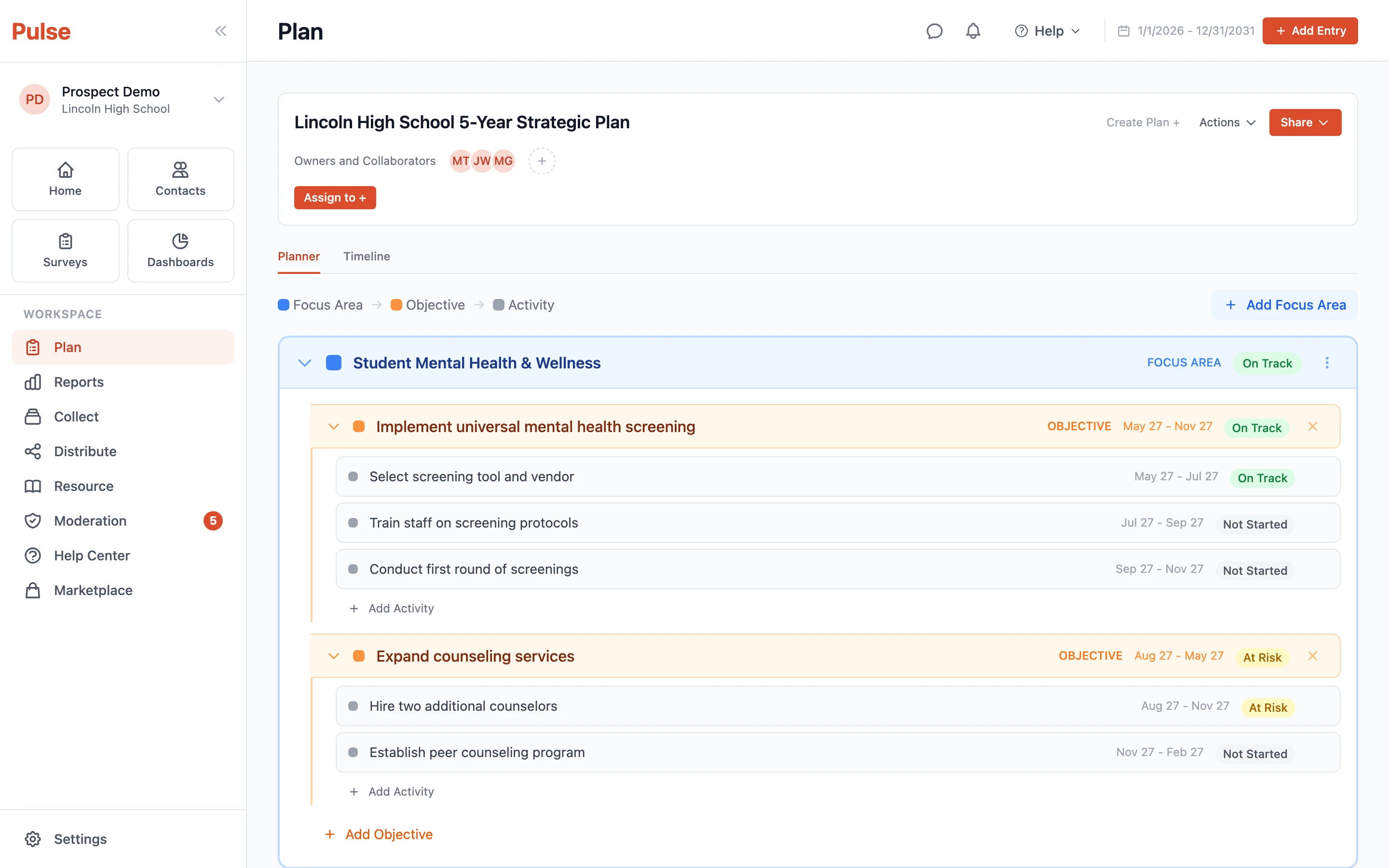
School Improvement Plan · Pulse
The situation you're in
Your school has a student support framework. What it doesn't have is a way to document that it's working.
Most schools have a strong theory of how they support students. The gap is between what the system says should happen and what teachers can actually do in the time they have. Pulse closes that gap without adding to your team's workload.
A teacher notices a student struggling on Monday. By Friday they've meant to file a report. The student is still waiting.
Three teachers flagged the same student via email, a sticky note, and a hallway conversation. Your counselor doesn't know what's already been tried.
Your board or accreditor asks for evidence your student support system is systematic. You have good intentions. You don't have data.
Built for teachers first
Teachers get back in the classroom. Pulse handles the paperwork.
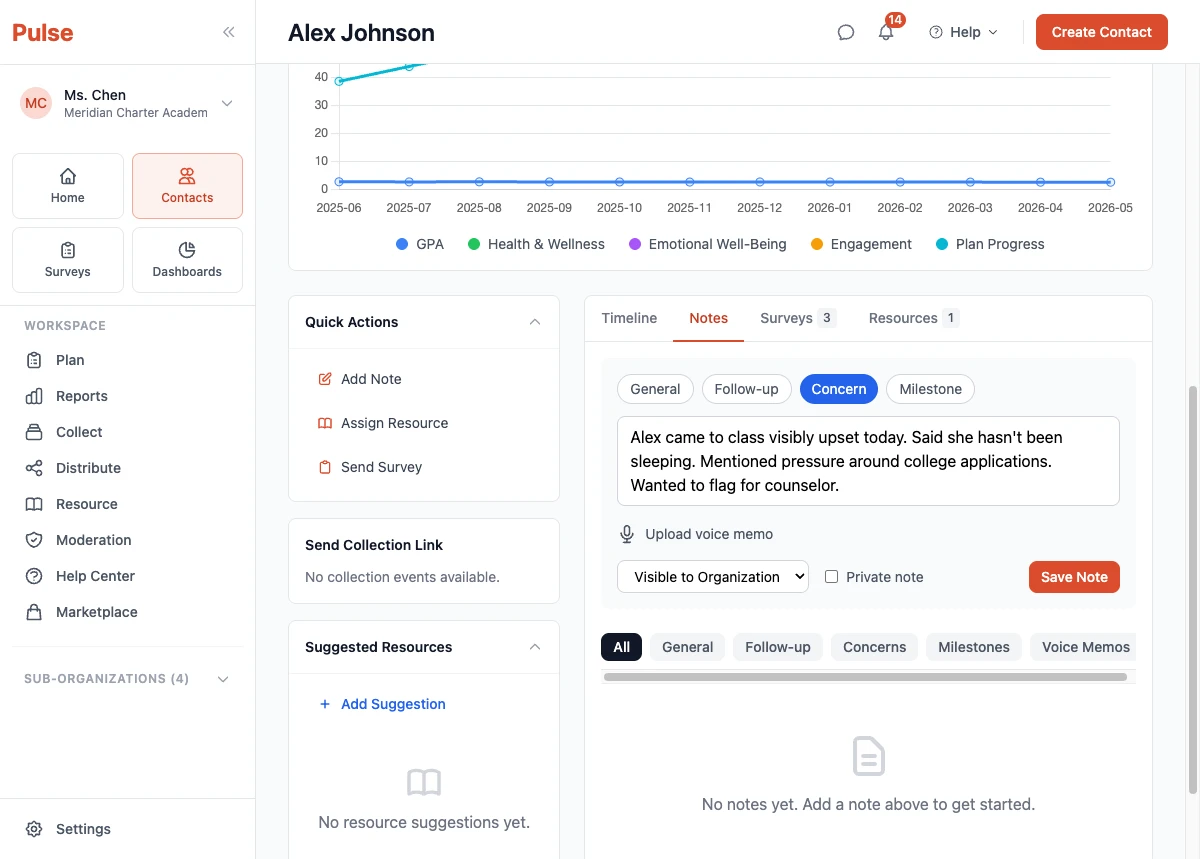
The reason student concerns fall through the cracks isn't that teachers don't care. It's that forms take 8-12 minutes of time they don't have. Pulse replaces the form with a voice note: under a minute, from their phone, wherever they are.
Pulse transcribes it, tags it, and files it to the student's record automatically. The right counselor gets an alert. The teacher gets confirmation it was received. Nothing gets lost.
Ms. Chen Meridian Charter Academy
New concern note
Voice note recorded
Filed to Alex Johnson · Concern
Resources being matched
Attendance + academic risk flagged
Counselor notified
Dr. Torres · Alert sent
How it works
Your teachers report it. Pulse routes it. You see every student who needs help.
Pulse is built to support every tier of your student support framework, from universal screening to intensive intervention, without adding to what your team already carries.
We sync your student data.
Pulse connects to PowerSchool, Infinite Campus, and Skyward. Rosters, attendance records, and existing student plans import automatically. Nothing to enter by hand.
Teachers flag concerns by voice in under a minute.
No form. No login required. A voice note from their phone, filed directly to the student's record. Pulse transcribes it and tags the concern type automatically.
You see every at-risk student and what they need.
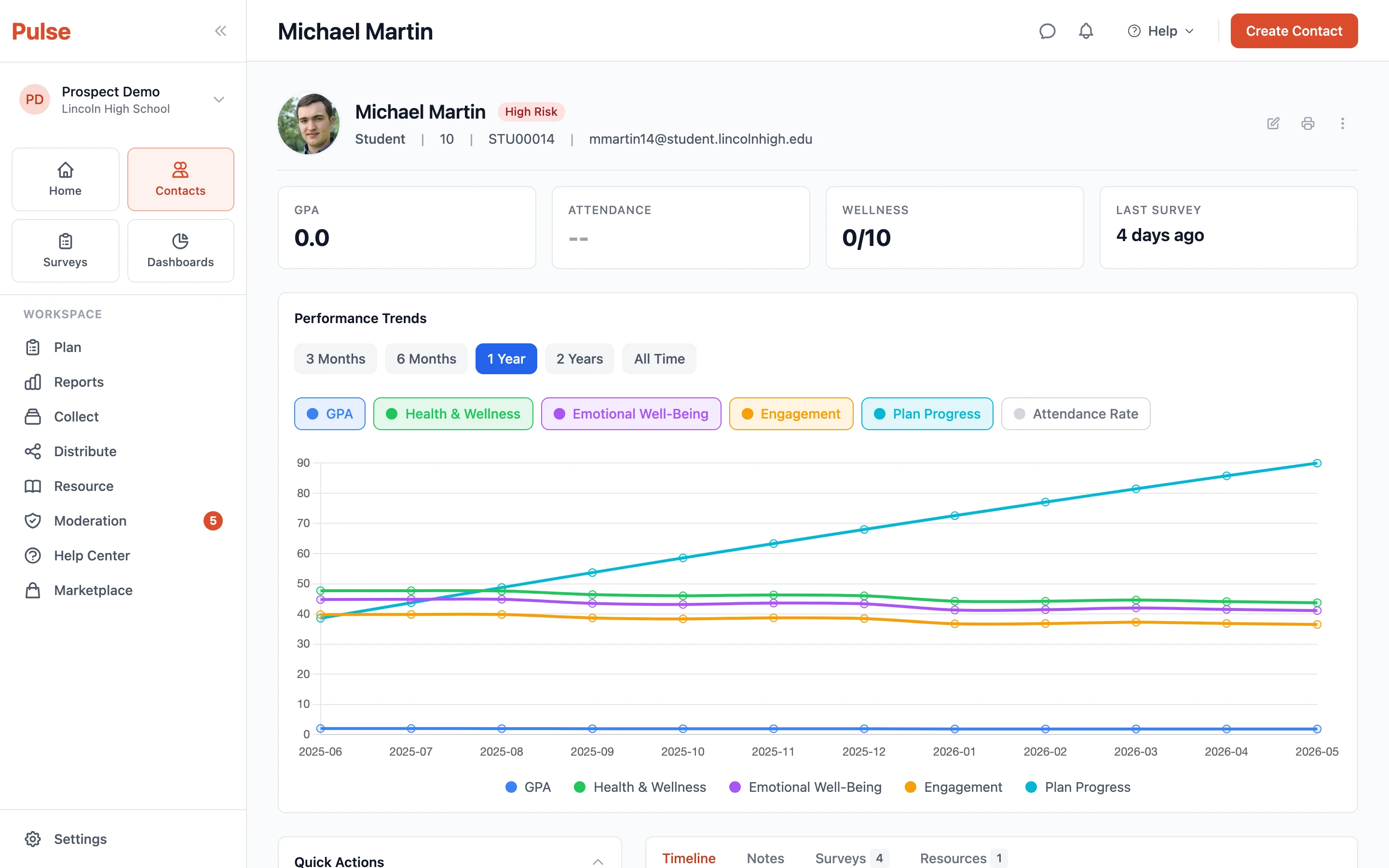
Risk signals from voice notes, surveys, and attendance data surface in one view. Who's been waiting longest, what type of support they need, and which counselor is assigned.
The right resource reaches each student.
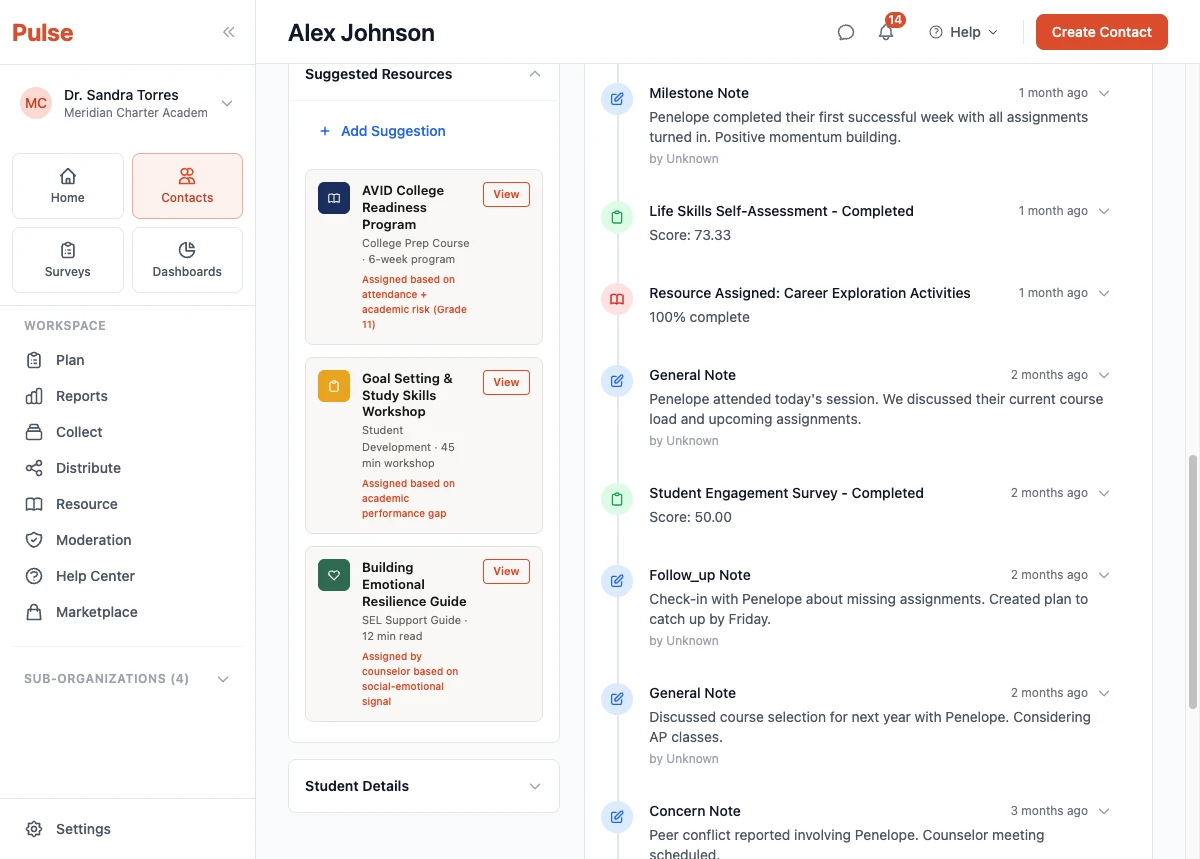
Pulse matches each student's situation to the right intervention: a college readiness program, an SEL support guide, a study skills workshop. It routes to the counselor and tracks what happened.
A quarterly report documents what your school actually did.
At-risk counts, intervention outcomes, teacher reporting rates. Board-ready. The systematic evidence your accreditor needs, generated automatically every quarter.
Not another tool. A replacement.
Schools aren't short on systems. They're short on systems that actually get used.
Pulse replaces the manual steps that slow your support team down. Your SIS stays. Your existing workflows stay. What changes is the friction between a teacher noticing something and a counselor doing something about it.
Pulse is eligible for Title IV-A (Student Support and Academic Enrichment) grant funding. Bring it up in your demo and we'll help you build the case.
Forms teachers fill out at the end of the day
8-12 minutes, often skipped
Voice notes in under a minute, from anywhere
Filed automatically to the student's record
Email chains and counselor spreadsheets
Siloed, stale, lost when staff leave
Live student records shared across your team
Every note, every intervention, one place
Manual year-end reports for accreditors
Assembled from scattered records under pressure
Quarterly reports generated automatically
Board-ready evidence, every 90 days
See the output
A quarterly student support report your board can read without a briefing.
At-risk student counts by grade, intervention completion rates, teacher reporting activity, and a prioritized action plan for the next 90 days. One document that shows your student support system is systematic, not improvised.
This is Meridian Charter Academy's Q3 2026 report. Real structure, anonymized students.
View sample reportQ3 Report · Student Support
Meridian Charter Academy
Jul–Sep 2026 · Grades 6–12
27
At Risk
6.6%
89%
Reporting
+14 pts
147
Interventions
+31
82%
Resolved
+8 pts
7-page sample · Generated by Pulse · Meridian Charter Academy
What changes
Most tools collect what happened. Pulse shows you what to do next, and whether it worked.
Month 1
You know which students are at risk right now, not at the last faculty meeting.
Which students have open concerns in the system, how long they have been waiting, and what type of support each one needs. Your counselors stop working from memory.
Month 3
You see whether your interventions actually closed the gap.
You changed the Grade 9 approach. You deployed a peer mentor resource to six students. Pulse shows you whether those moves improved outcomes, as data, not gut feeling.
Month 6+
You have a record that survives when staff leave.
Full intervention history, what worked, what didn't, which students were served. When a counselor leaves, their student history stays. When your board asks for proof, you have it in one document.
Ready to see it?
30 minutes. We'll map how Pulse fits into what your school already does.
We'll ask about your current student support process, your team size, and where students are most likely to fall through the cracks. We'll design a 30-day pilot plan before you leave the call.
Further reading: What works (and what doesn't) in school management software for parent engagement