When agreement isn't alignment
Your team says they're aligned.
Pulse shows you if they actually are.
Pulse runs structured check-ins, surfaces exactly where alignment breaks down, and equips your team to close the gap before it shows up in your results.
PULSE PLATFORM
Activity Feed
28%
of leaders responsible for executing strategy can name three of their organization's strategic priorities
MIT Sloan Management Review
44%
of teachers say their school improvement plan actually changed what they do in the classroom
RAND American Educator Panels
74%
of nonprofit strategic goals have no named owner responsible for executing them
ClearPoint Strategy
Who Pulse is for
Built for three types of leaders.
Your results depend on how well your whole team executes. Pulse shows you who's aligned, who's equipped, and where the gaps are.
Book a meeting
Business
The Chief of Staff or Strategy Owner
OKRs are tracked. Execution is happening. But you still can't tell if the people running the strategy actually understand what it's for. Pulse surfaces the gap before it shows up in Q4 results nobody can explain.
See how it works
Education
The Principal or Program Leader
You're executing a district plan or improvement framework. You need to know whether your teachers and staff are aligned with the direction, or just going through the motions.
See how it works
Nonprofit
The Director or Program Manager
The strategic plan is set. The mission is real. But you can't tell whether the staff carrying it out actually understand the direction, or whether clarity dissolved between leadership and the front line.
See how it worksWhat's inside Pulse
Five views. One complete picture of your organization.

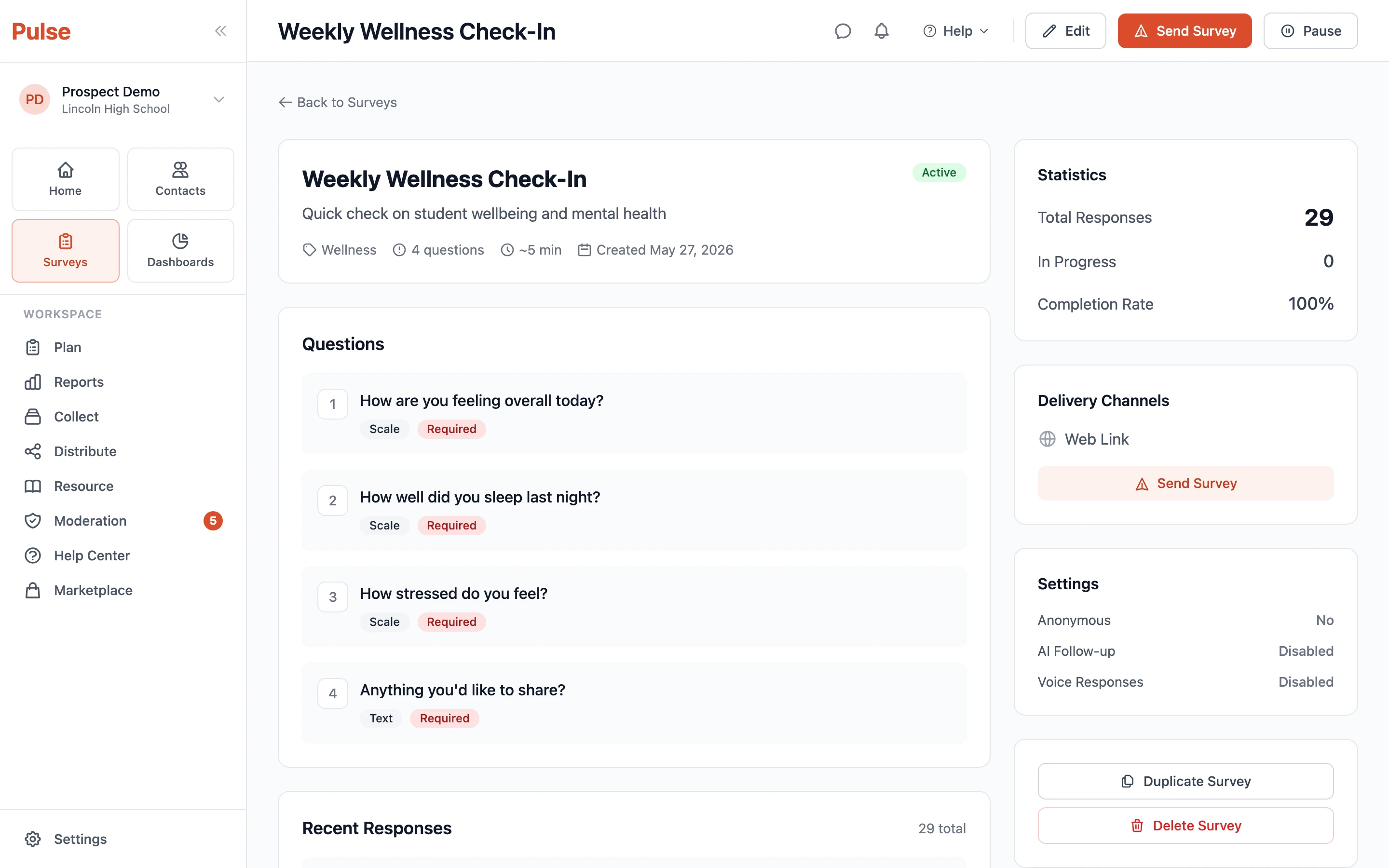
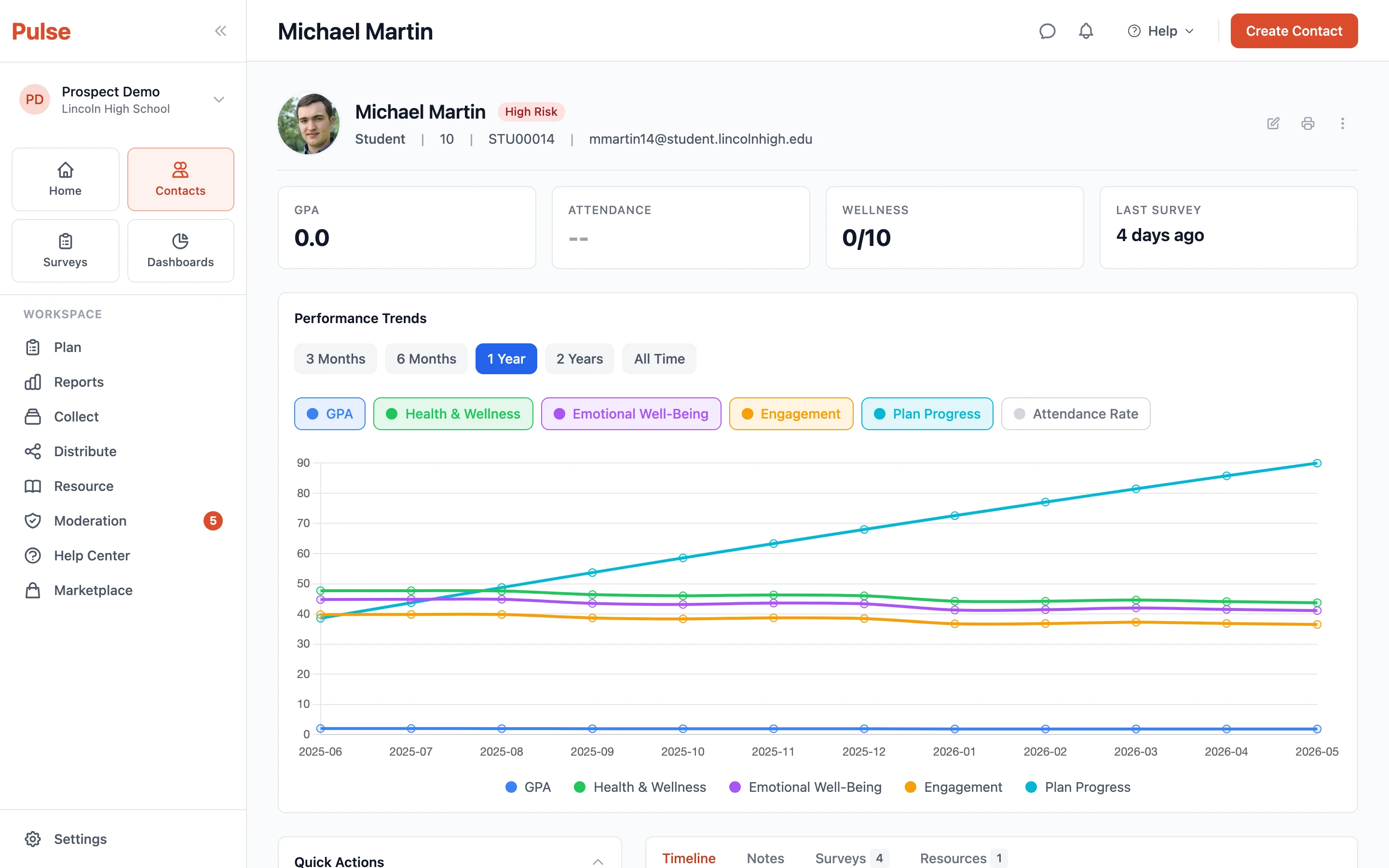
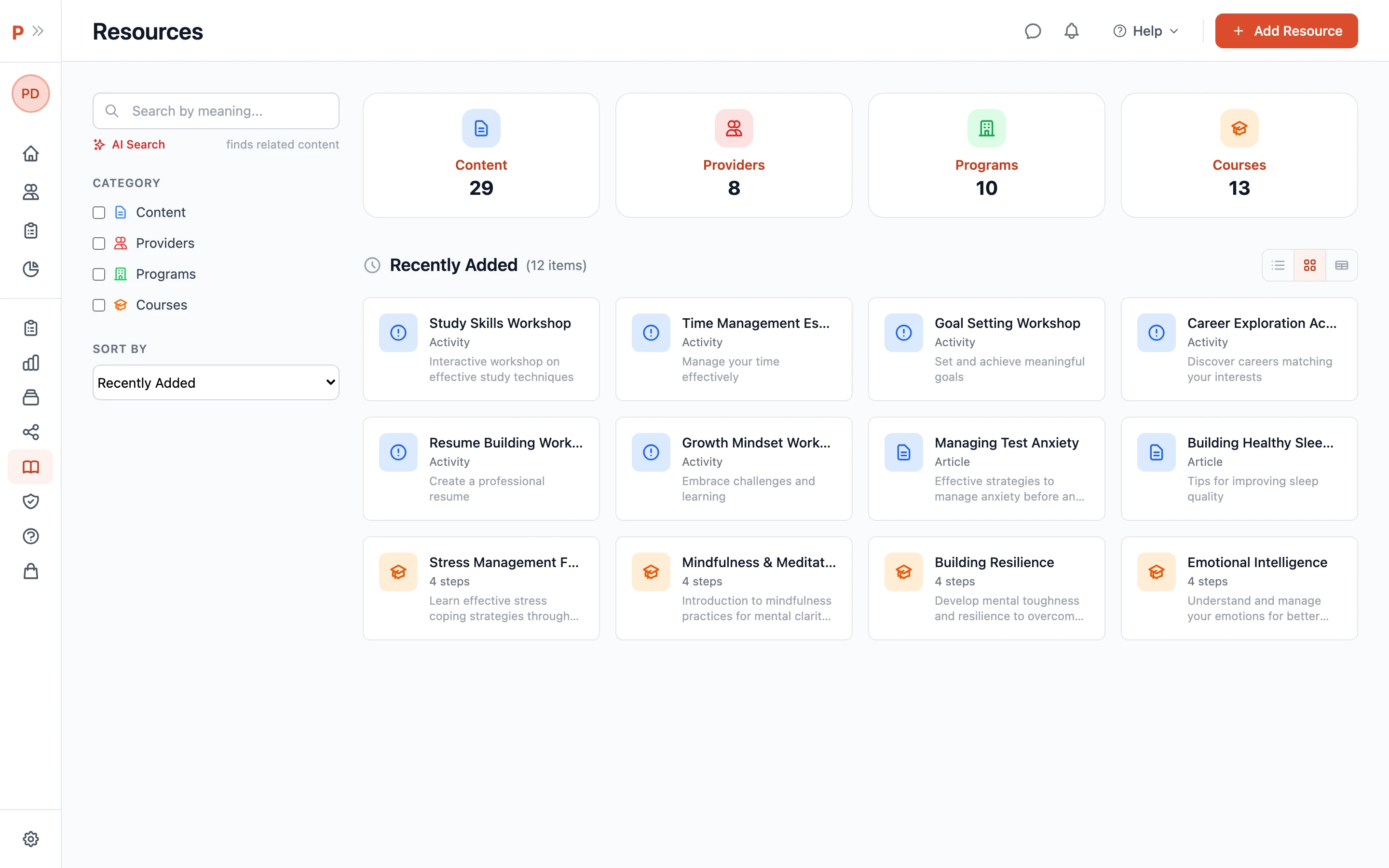
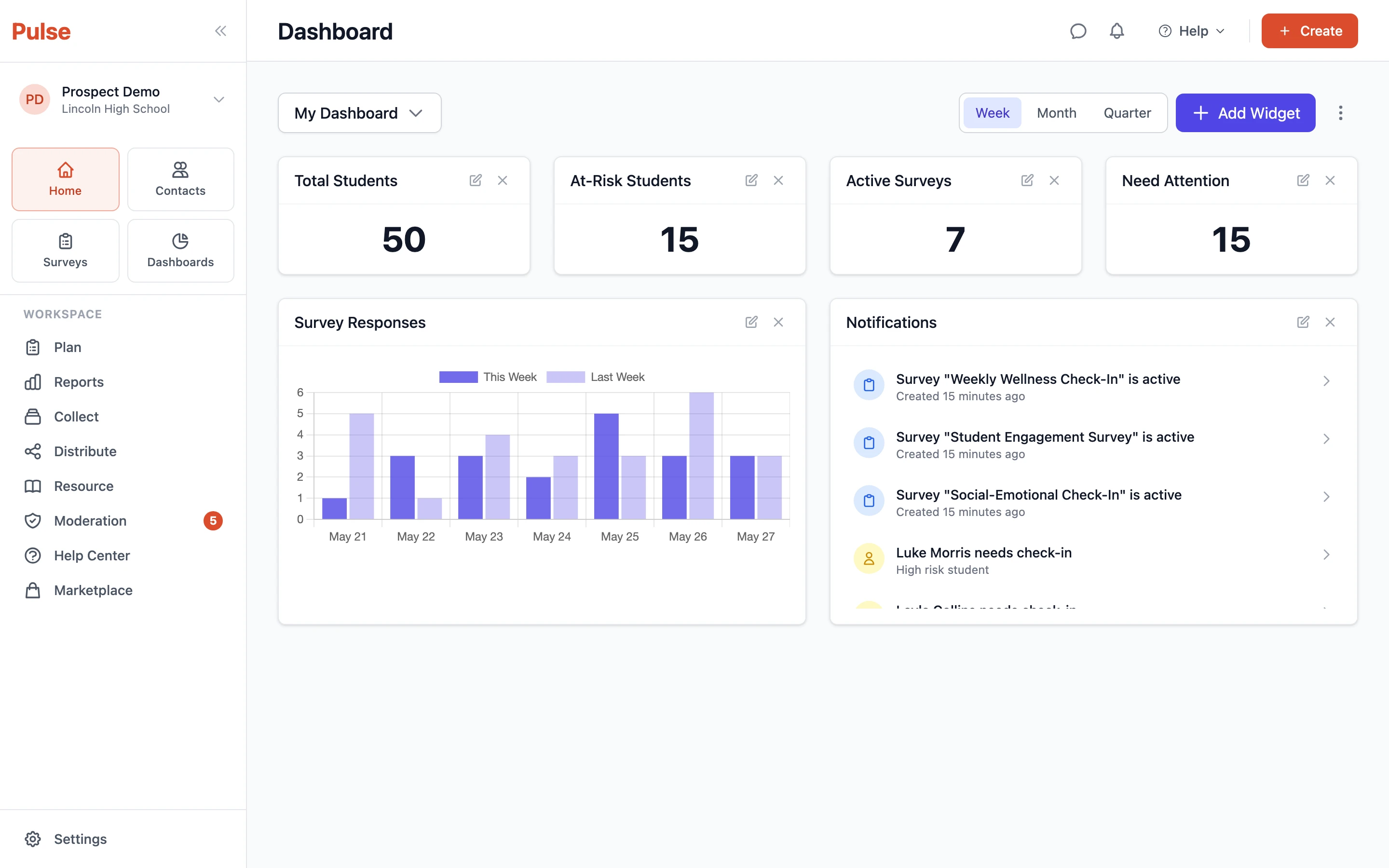
What changes when you use Pulse
You already have workarounds. They just don't scale.
Before
Quarterly all-staff surveys everyone fills out the same way because they know leadership reads them.
With Pulse
Targeted micro-surveys deployed against specific plan objectives, anonymized so responses reflect what people actually think.
Before
Everyone aligned in the kickoff. Heads nodding, questions handled, leadership on board. Then week three hits and half the initiative is moving in the wrong direction.
With Pulse
Structured check-ins between the kickoff and week three that catch the gap before it becomes execution debt you spend the quarter unwinding.
Before
Walking the halls, reading the room, and trusting your gut about whether the team is with you.
With Pulse
Alignment data by team, role, and objective so you lead the conversation with evidence instead of instinct.
Before
Finding out at the quarterly review that a department has been executing against a strategy they fundamentally misunderstood.
With Pulse
Knowing the week the gap opened, which team it lives in, and what the next conversation should address.
Common questions
Everything you need to make the call.
Straight answers. Nothing held back.
We already have an engagement survey. Isn't this the same thing?
Engagement surveys tell you how your team feels about working here. Pulse tells you whether your team can actually execute what you're asking them to do. Those sound similar but they're measuring completely different things.
An engagement score can come back strong in January right before a strategy completely stalls in March. What Pulse is tracking is whether the people responsible for your plan actually understand it, believe in it, and have what they need to move it forward. Most leaders we work with have years of engagement data and are still caught off guard when the plan doesn't land. Pulse fills the gap that engagement surveys were never built to fill.
My team already knows the plan. We've communicated it multiple times.
That's a belief, not a measurement. And it's the belief we hear most often before someone sees their Pulse data.
Communication and comprehension are two different things. You sent the email. You held the all-hands. You put it in the strategic plan. But what actually landed? Which parts of the direction did your team internalize, and which parts did they hear, nod at, and set aside? What is the person on your team who says "yes" in every meeting actually doing when they go back to their desk?
Every single leader we've shown Pulse data to has found at least one meaningful gap they didn't know existed. Not because they were doing something wrong. Because they'd never had a way to see the distance between what they said and what the team actually understood. Pulse is how you'd know the difference.
We've been burned by software implementations before. How long does this actually take?
Most software implementations are the worst. You spend months configuring, training, chasing adoption, and by the time you're through it, half the team has stopped using the thing and you're stuck in a contract. We built Pulse specifically to not be that.
Your team never has to learn a new system. They answer a short check-in, usually under three minutes, usually from their phone. That's it. There's no dashboard your staff has to adopt, no new workflow to build, no IT project to manage on your end. We handle the setup.
Most organizations are running their first check-in within two weeks of signing. You'll have real data from your actual team within a month. If it's working, you'll know quickly. If something isn't right, you'll know that too.
Is this surveillance? I don't want my team to feel like they're being watched.
This comes up in almost every conversation we have, and it's exactly the right question to ask.
Responses are anonymized at the individual level. You see patterns across your team, never individual answers. We literally cannot tell you what one specific person said. What we can tell you is that three people in your operations team aren't clear on what the Q3 priorities mean for their work, or that two departments have significantly different reads on where the organization is headed.
The check-in questions are also built with your team's input, not handed down to them. In practice, teams respond more honestly to Pulse than they do to town halls or performance reviews precisely because the system protects them. Leaders who use Pulse consistently report that trust on their team goes up, not down, because they stop managing from assumption and start leading from evidence. That shift is visible to the team, and it changes the dynamic.
We're too small for something like this.
The tools that feel "enterprise" were built for companies with thousands of employees and layers of management to move strategy through. That's not what Pulse does, and that's not the problem it was built to solve.
Most of our pilots start with teams between 15 and 80 people — a nonprofit staff, a school faculty, a 40-person division inside a larger company. At that size, misalignment isn't a nuisance. It's existential. Every person on your team is carrying real weight, and there's no organizational slack to absorb the drift when someone's operating from a different version of the plan.
The smaller the team, the higher the consequence of each person being unclear. If you have a strategy and a team responsible for executing it, you have exactly enough people for Pulse to matter.
We already use Cascade, Envisio, or an OKR tool. What does Pulse do that those don't?
Those tools track whether the plan is moving. They tell you what got done, what's on track, and what's behind. That's genuinely useful. Pulse tells you something those tools can't: whether your team actually understands and believes in the direction in the first place.
You can have green status on every objective and still have a team that's executing mechanically, quietly skeptical of where things are headed, or simply unclear on what the priorities mean for their actual day-to-day work. We've talked to Chiefs of Staff with full Cascade deployments who were still surprised by what their teams didn't understand. The dashboards showed progress. The alignment wasn't there.
Pulse doesn't replace those tools. It fills the space between what the dashboard shows and what's actually happening in the building. Most organizations use both.
Tell us what your data isn't telling you.
30 minutes with the founders. We'll ask about your organization, your strategy, and the gap you're trying to close. If it's not a fit, we'll tell you. No pitch deck.
Book a Meeting